Internal initiative · culture change · BFSG
Accessibility
task force
A small group setting up the tools and the habits an agency needed as German accessibility law came into force.
Context
When the Barrierefreiheitsstärkungsgesetz brought real accessibility requirements to digital products in Germany, agencies had to work out what that meant day to day. Ours had people who knew the subject well and projects where it was done properly. The knowledge just sat with individuals and tended to be applied late, usually at review, when changing things is expensive.
Four of us formed a task force to change that. Less about compliance, more about making accessibility something colleagues could reach for early, without having to find the right specialist first.
What we built
01
The toolbox. Guidelines, checklists and reference material, put together so someone could open it mid-project and use it that afternoon. Practical rather than exhaustive. We started from the questions people were actually asking rather than from the standard.
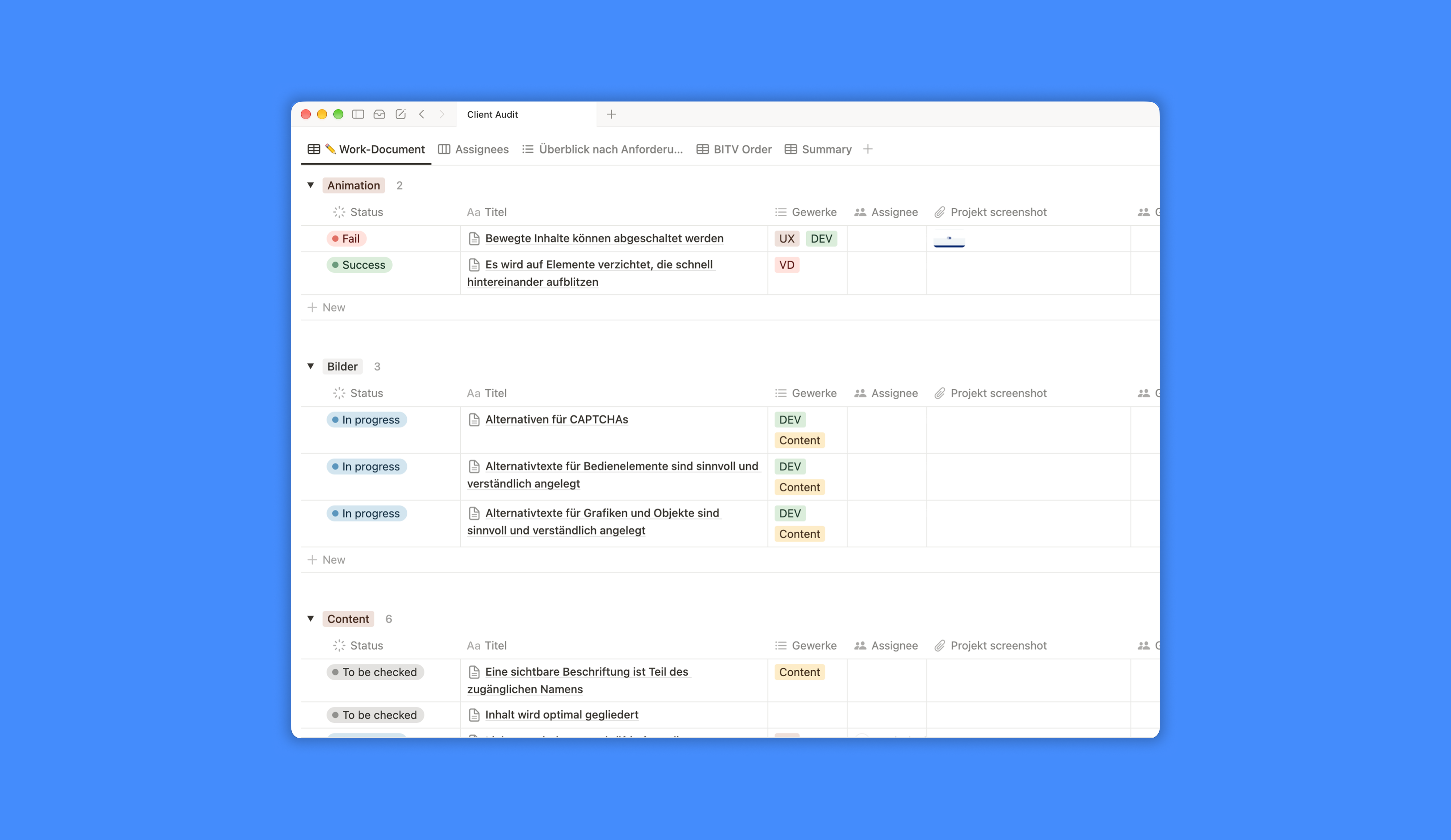
↑ The accessibility toolbox
02
An open round. A recurring session where anyone at the agency could bring something. A live problem, a client request, plain curiosity. The four of us answered what we could and looked up the rest together. As much as anything it made the subject ordinary, easier to ask about early than to raise as a problem later.
03
Client audits under the new law. We reviewed client products against WCAG and the German requirements and wrote up what needed changing, in what order. The audits taught us as much as they delivered. The edge cases only really show up in someone's actual product.
04
Sitting with the developers. On a hotel client's website I worked alongside the development team while they implemented, answering questions as they came up and going through specific criteria with them. It's a lot easier to follow accessibility guidance when it arrives during the work than after it, and that team was very open to it.
Why this one is in the portfolio
We started it ourselves
Alongside everything else. No brief, no client.
It outlasted single projects
The toolbox, the sessions and the audit practice changed how the subject was handled across teams.
It meant learning properly
Advising developers during implementation asks for a different depth than designing to a checklist, so I had to learn how the criteria translate into code.
It's a position
Accessibility says something about who a product is for. That's the part I care about most.
Outcome
4
people in the core group
Open rounds
recurring, for the whole agency
BFSG
client audits under the new law
The task force was still running when I left, with the toolbox in use, the open rounds continuing, and audits part of what the agency offered. Of everything I did there it was the least attached to any single project, and probably the thing most likely to still be having an effect.